
Ontario Nuclear: Debunking Costly Myths
Learn how Ontario nuclear power, despite claims of cost-effectiveness, is heavily subsidized and carries significant risks. Explore the truth behind the promises and the reality of nuclear energy.
Learn how Ontario nuclear power, despite claims of cost-effectiveness, is heavily subsidized and carries significant risks. Explore the truth behind the promises and the reality of nuclear energy.
Tesla is rapidly improving its Full Self-Driving (FSD) technology, with a 1,000x improvement expected by 2Q25. This will make it safer than human drivers. Tesla is also planning a robotaxi fleet with the Cybercab. Existing full self driving is already 10 times better than humans. Track the data, not the naysayers.

Elon Musk, Tesla’s CEO, detailed high expectations at Tesla’s quarterly Q3 2024. Investors goto over 28 updates on production, competition, and future plans. Musk discusses autonomous driving, new models like the Cybertruck, and Tesla’s battery tech. He addresses challenges like supply chain issues and regulatory hurdles, maintaining optimism about Tesla’s market dominance and innovation.

The scientific consensus is clear: human activity is causing dangerous climate change with potentially catastrophic consequences.
We have passed the point of avoiding some impacts, but immediate action can still limit the damage.
Climate change is a social justice issue, as wealthier nations contribute more to the problem but are less vulnerable to its effects.

Japan has over contracted gas from countries such as Australia. With 20% of surplus gas, they are reselling globally. While they have clean energy plans, their greenwashing shows up as still wanting to have their gas.

Recent publications show a 3°C climate change costs 36% of GDP or $56 trillion. That is like the depression of 1929, but forever. The article outlines a three-pronged approach of Mitigation Resilience and Renewal for Climate Change. There are scary changes underway that have a potential to decrease

Batteries are essential for the renewable energy transition. They enable storage of excess solar power, reducing reliance on fossil fuels. Tesla’s recent announcement of producing 100 million 4680 batteries highlights the rapid advancements in battery technology. This progress is crucial for a sustainable energy future, for electric transport and grid storage to enable full production by solar and wind for the end of the fossil fuel era

China is a good comparison of hydrogen fuel cell vehicles. In Foshan city an H2 tram has been mothball and when you look at all cars and public transport, it is hard to see where the use case for hydrogen is.
Climate change is a pressing global issue with far-reaching consequences. Climate change refugees have increased 41% since 2008 with over 32 million refugees today. UNHCR debunks 5 myths with facts highlighting the urgent need for action. Key points include the growing number of people displaced by climate-related disasters, the challenges of predicting future displacement, and the importance of both mitigation and adaptation efforts. We must stope emissions, and build more resilient and sustainable future for all.

The Expanded Programme on Immunization (EPI) has been a cornerstone of global health, saving over 150 million lives and improving health outcomes worldwide. Through its comprehensive approach and the impact of vaccines like measles, EPI has demonstrated the power of vaccination in reducing mortality, promoting equity, and protecting individuals throughout their lifespan.
While over 260t steel, 300t iron ore, 170t coking coal are used to build a 4MW wind turbine, the energy from a wind turbine is 660 times more. The wind turbine produces 420GWh electricity over its 30-year life, while the equivalent amount of coal electricity would require 290,988t of coal. Therefore, wind energy is a much cleaner and more sustainable option.

Batteries are essential components in modern technology. From smartphones to electric vehicles, they store and deliver energy efficiently. Understanding battery systems involves factors like chemistry, capacity, and management. Proper maintenance and disposal are crucial for ensuring their longevity and environmental sustainability.

A new study challenges conventional wisdom in EV battery manufacturing. Researchers found that fast charging, despite initial lithium loss, can significantly extend battery lifespan. This could lead to more efficient and sustainable electric vehicles and extend grid storage batteries to decades
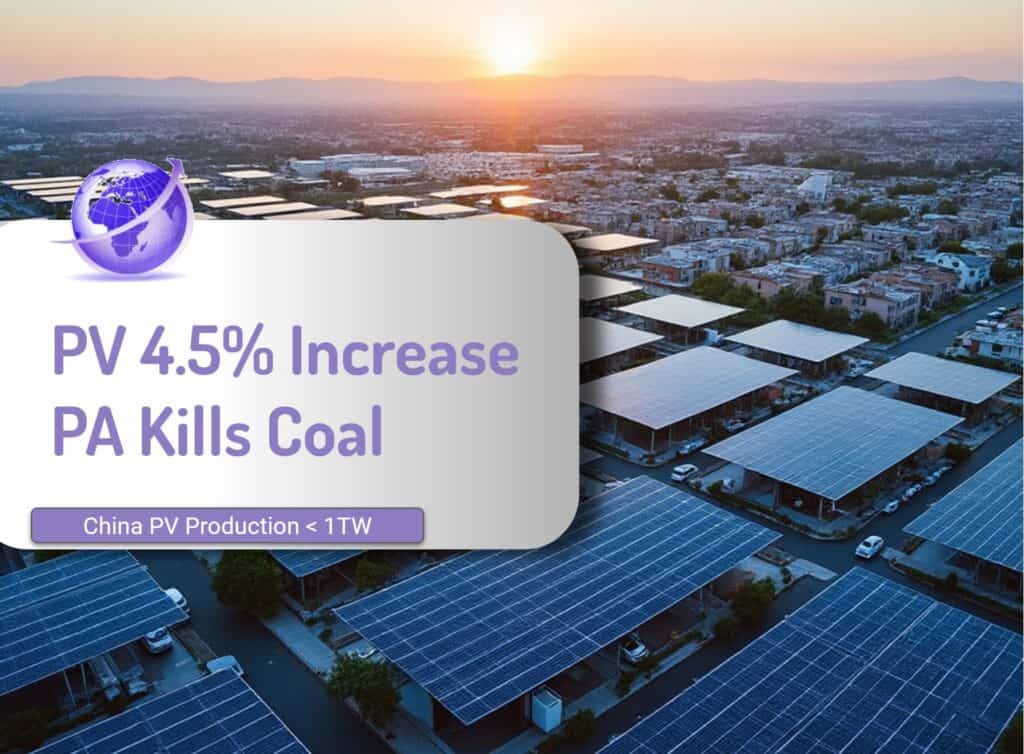
With solar panel production capacity of China over 1TW PV in 2024 is enough to replace 4.5% fossil fuel electricity generation, with 100% by 2028. China faces an industry collapse of companies making solar panels. Either panels must be deployed globally or there will be a sector collapse.
Enough Solar Panels for 100% Electricity in 4 Years Read More »

Nuclear power is riskier than previously thought with failure rate of 1 per 3704 reactor years. That’s about 1 per decade. Despite safety improvements, severe accidents remain a concern. Limited data from the IAEA hinders thorough analysis.

Earth’s energy imbalance EEI is caused by greenhouse gases. Leon Simons uses analogies (bombs, sunlight) to show the immense amount of heat trapped (20 ZJ/year). This trapped heat is 33x humanity’s annual energy use and could raise sea levels by 15cm. The goal is to visualize the vast amount of heat our actions cause.

Environmentalist George Monbiot believes precision fermentation can revolutionize food production. He dismisses concerns about factory processing and genetically modified organisms, arguing that these technologies offer a more sustainable and ethical alternative to traditional livestock farming. While corporate control is a risk, Monbiot emphasizes the technology’s potential to reduce environmental harm.

As Professor Vaclav Smil highlights in “Grand Transitions,” coal, oil, and now solar power have dramatically reshaped transportation and society. Harnessing the sun’s energy promises to end fossil fuel dependency, disrupt industries, and lift billions out of energy poverty.
Energy Breakthroughs Drives Transportation: History Repeats Read More »

Recent advancements in AI, particularly in early diagnosis and treatment of dementia, provide a glimmer of hope. Dementia, a major global health challenge, is expected to affect 153 million by 2050. AI detection and lifestyle changes like exercise can delay onset, while new drugs like Donanemab offer promising, albeit expensive, therapies.

Australia’s government subsidizes the fossil fuel industry, emphasizing gas fields in its strategy despite environmental concerns. Critics argue this undermines emissions targets and misses potential royalty revenues. The policy supports export-focused gas development, risking public funds for decommissioning costs while contradicting net-zero ambitions and favoring fossil fuel interests.