In 1957, scientists at Humble Oil, now ExxonMobil, published research showing that burning fossil fuels was raising atmospheric carbon dioxide. By 1978 an Exxon scientist was telling management that a doubling of CO₂ could lift global temperatures by 2 to 3°C, and that there was only a five to ten year window to gather the information needed “before the need for hard decisions.” A new report from the Center for Climate Integrity, Climate Fraud 101, pulls together 101 documents from 1957 to 2026 to show what the industry did next.
What they knew
Shell’s confidential 1988 report warned that the impacts of continued fossil fuel use “could be larger than any that have occurred over the last 12,000 years,” and that by the time warming became detectable it could be too late for effective countermeasures. In 1989 the New York Times reported that Shell had modified an offshore platform in anticipation of rising seas. The companies did not ignore the science. They planned around it.
“Emphasize the uncertainty”
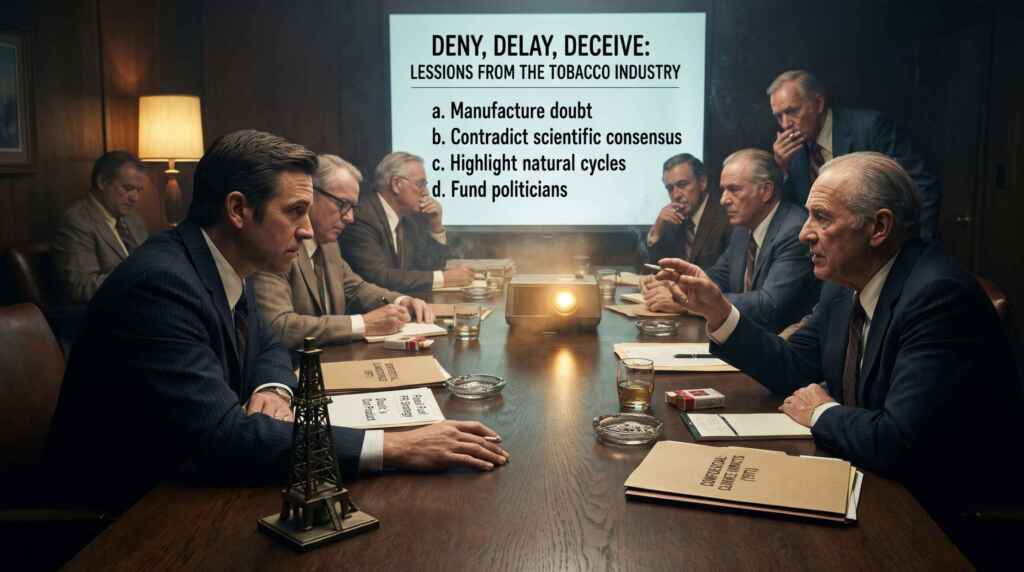
After James Hansen’s 1988 testimony to Congress, Exxon’s internal position became to “emphasize the uncertainty in scientific conclusions.” The Global Climate Coalition, backed by the oil majors, carried the message to the public. Its own draft primer conceded the science was “well established and cannot be denied,” yet that language was cut from the final version. Its communications consultant later boasted the campaign had “successfully turned the tide on press coverage.” In 1998 an API plan defined victory as the point when uncertainty about climate science became part of the “conventional wisdom.”
From denial to delay
When denial became untenable, the pitch changed. BP rebranded as “Beyond Petroleum” in 2000, yet its CEO later said, “We are not getting out of the petroleum industry.” Carbon capture and natural gas became the preferred “solutions”, even though a confidential BP presentation in 2018 admitted that carbon capture had “stalled and commercial deployment is very limited.” Net zero followed the same pattern: a 2020 Shell briefing told staff not to imply net zero was a Shell goal, and in 2025 BP’s new CEO said the company’s earlier ambition had gone “too far and too fast.”
The courts are filling up
If politics has been slow, the courts are not. According to Norton Rose Fulbright’s latest climate litigation update, the total number of climate change cases filed globally reached 4,993 as of October 2026, up from approximately 3,099 recorded in July 2025. That is about 1,900 more cases in roughly fifteen months, an increase of around 60%.
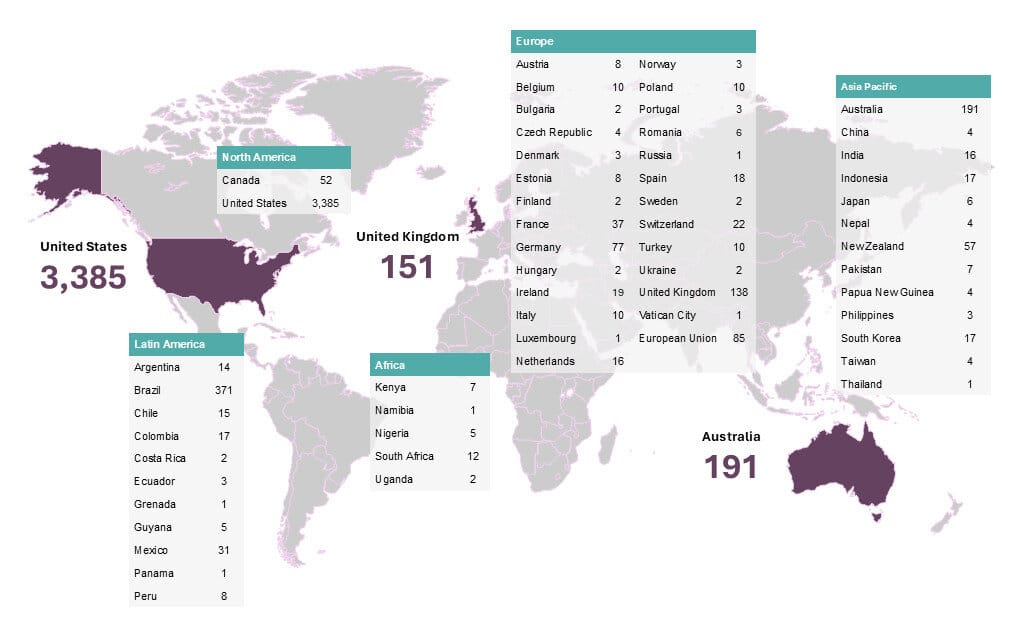
The two numbers measure different things. The 4,993 is a global count of climate change cases. The Center for Climate Integrity’s “dozens” of legal actions refers to cases seeking to hold oil majors and their enablers accountable for deception. The industry has noticed the threat. In early 2026 the API’s policy agenda called for policymakers to “STOP EXTREME CLIMATE LIABILITY POLICY,” Republican lawmakers have introduced bills to shield producers from lawsuits, and several states have considered or adopted their own waivers. Back in 1998, Shell’s own scenario planners imagined environmental groups bringing a class action against fossil fuel companies for ignoring what scientists had been saying for years.
What this means for climate mitigation
In Optimistic Storm Part 1 I look at the end of the fossil fuel era through three lenses: technology, economics, and politics and belief systems. Most pushback comes from incumbents, not from technology or economics, and the tactics follow the tobacco playbook. This report supplies the paper trail. Where I would add to it is that deception is only part of the story. Banks and super funds still finance fossil fuel expansion, governments still subsidise it, and voters’ beliefs are shaped by intuition, tribe and age as well as by advertising.
The 2025 and 2026 retreats from net zero show politics can still slow the transition. I remain optimistic that cheap solar, wind and batteries will win on economics. The courts add a second pressure: companies that knew, and delayed anyway, can be made to answer for it. Meanwhile the practical steps are unglamorous: stop the subsidies, follow the money, and make it easier for households and businesses to switch to electrons.
Difference Between Big Oil Knew and Optimistic Storm Pt 1 Chapter 2
| Climate Fraud 101 | Optimistic Storm Part 1 | |
|---|---|---|
| Cause | Deliberate corporate fraud, proven by documents | Incentives: “simple economics,” not even a conspiracy |
| Culprits | Oil majors, the API, front groups | Also banks and super funds, wealthy-country governments and subsidies, media advertorials, and voters’ belief systems |
| Focus | US-centric, corporate | Global, with Australian detail (age gap, voter demographics, the big four banks) |
| Voters | Largely victims of deception | Intuition-driven (Haidt), tribal, and shaped by age |
| Remedy | Accountability, litigation, binding limits | Stop subsidies, then let cheap solar, wind and batteries disrupt incumbents |
| Tone | Prosecutorial | Optimistic: “economics and technology will triumph over politics” |
The tension. The report’s last chapter shows that politics is still holding the transition back. By 2025 BP had scrapped the main tenets of its 2050 net zero strategy, Shell has backtracked, and US states are moving to shield producers from climate lawsuits. My optimism depends on economics beating politics fast enough. The report implies that politics, backed by decades of deliberate delay, can still stall it.
The finance section in Part 1 fills a gap the report doesn’t cover. It shows that investors and voters, not only producers, sustain the delay.
Two Rulings that Raise the Stakes
Australia: the High Court and Scope 3 emissions
Meanwhile, in Australia, on 7 October 2026 the High Court ruled 3:2 in MACH Energy Australia Pty Ltd v Denman Aberdeen Muswellbrook Scone Healthy Environment Group Inc [2026] HCA 35, widely described as its first substantive climate change decision. The case concerned an extension of the Mount Pleasant coal mine in New South Wales that would double annual production to 21 million tonnes and run to 2048, with about 98% of its emissions being Scope 3, released when the exported coal is burned overseas. The majority held the planning commission had not properly considered whether conditions should limit those emissions, and that pointing to national and international climate frameworks was not enough; the Court did not decide whether the mine can go ahead, and the matter returns to the NSW Land and Environment Court.
The International Court of Justice and state obligations
On 23 July 2025 the International Court of Justice delivered a unanimous advisory opinion on the obligations of states in respect of climate change. It found that states have binding legal obligations to protect the climate system and prevent significant harm, resting not only on the Paris Agreement and the UN climate convention but also on customary international law, human rights law and the UN Convention on the Law of the Sea. The Court set a stringent due diligence standard and said that failing to regulate private emitters, or granting fossil fuel licences and subsidies, may amount to an internationally wrongful act.
References
- Center for Climate Integrity, Climate Fraud 101: Big Oil’s Climate Deception Explained in 101 Documents, 1957–2026, September 2026. climateintegrity.org/projects/climate-fraud-101
- Norton Rose Fulbright, Climate change litigation update, October 2026. nortonrosefulbright.com
Read further: for Australia
- High Court of Australia, judgment [2026] HCA 35 (PDF)
- Allens, Deconstructing MACH Energy v DAMSHEG
- Environmental Justice Australia, High Court rules on climate change
Read further: for ICJ