Climate change is routinely framed as a future problem — something our grandchildren will deal with, a cost we’ll worry about once we’ve sorted out the economy. New research from UNSW, released today as part of the NSW Net Zero Commission report, demolishes that comfortable fiction.
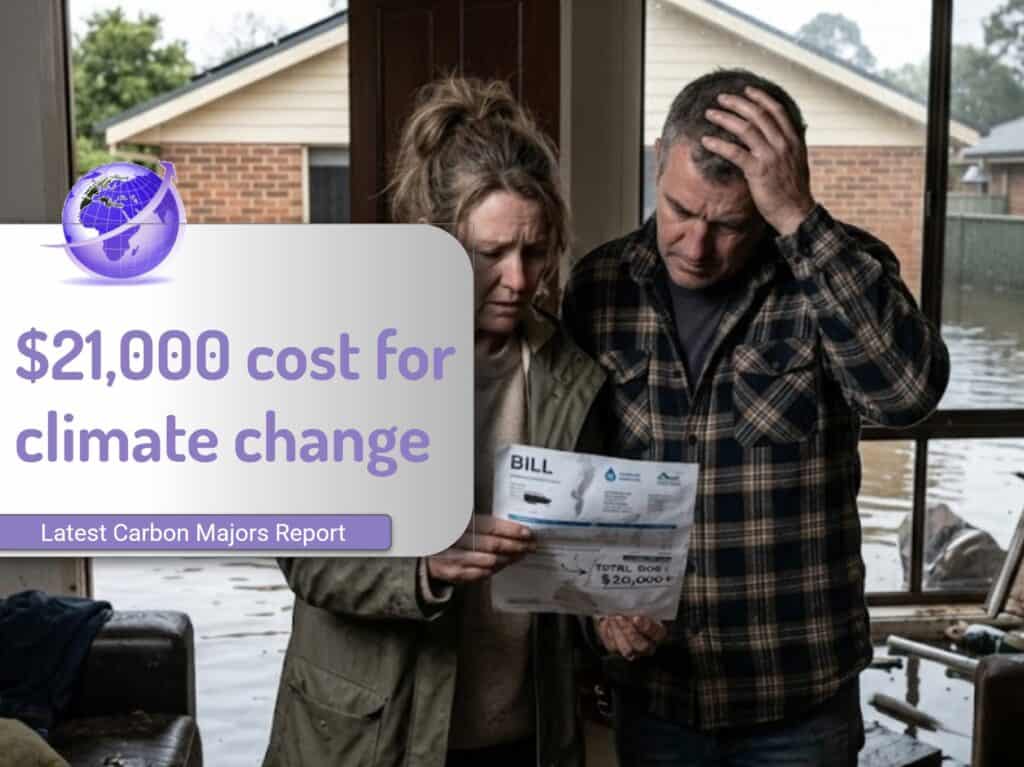
At just 1.35°C of warming — where we sit right now — New South Wales has already absorbed median economic losses of around 18%, with estimates ranging from 4% to 33%. In household terms, that translates to roughly $21,300 less per person in annual income. Not projected. Not modelled for 2050. Already gone.
Climate Change Costing NSW
Let that sink in. NSW is Australia’s largest economic jurisdiction. An 18% hit to output at barely more than one degree of warming is not a rounding error. It is a civilisational bill that has been quietly accumulating while politicians argued about whether the problem was real.
What makes this research particularly striking is where the damage is coming from. Most Australians, when they think about climate costs in NSW, picture the Black Summer bushfires of 2019–20, or the catastrophic floods that followed. Those events were real and devastating. But the research finds they are not the primary economic driver. The majority of damage flows through disrupted global weather patterns that ripple through international supply chains, pushing up the cost of goods, suppressing productivity, and compressing household purchasing power. The economy doesn’t care whether the drought that cut your wheat supply was local or on the other side of the world.
This is the point that our political debate has consistently missed. When voters are asked to rank climate change against cost of living, housing affordability, or interest rates, the framing implies a trade-off. Fix the economy first, then worry about the climate. But this research confirms what many economists have been arguing: these are not competing priorities. Climate change is a primary driver of the economic pressures squeezing Australian households right now.
The transition to renewable energy is not a luxury for prosperous times. It is the most direct economic lever available to reduce the ongoing damage. Every year of delay compounds the loss.
One degree of warming has cost NSW $21,300 per person per year. We are currently on a trajectory toward three degrees or more.
The bill is going to get a lot larger.
📖 Full article:
#ClimateChange #NSW #Economy #EnergyTransition #OptimisticStorm