
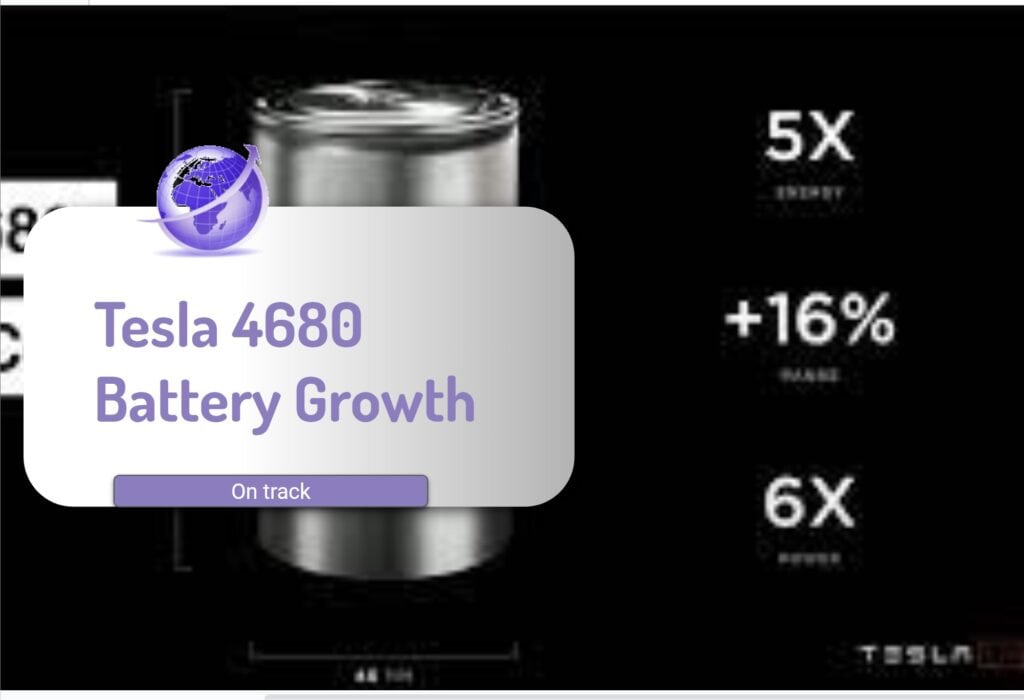
Tesla 4680 Battery Ramp
The Tesla 4680 production has been growting at 21% per month since product launch. By the end of 2023, the 4680 battery will start deliverying the increase in cell density and cycle time as promised in 2019.
Gigafactories are the giant plants that make batteries by the gigawatt-hour, and they are where the cost of clean energy is being driven down. This category looks at the build-out of battery manufacturing around the world. Our posts cover battery gigafactories in China, Europe and the United States: who is building them, how big they are and how quickly capacity is growing to meet demand from electric vehicles and grid storage.
Scale matters because batteries follow a learning curve. Each doubling of production cuts cost, which in turn pulls in more demand. The race to build capacity is shifting where batteries, and the jobs that come with them, are made. We also look at Tesla’s 4680 cell and its production ramp as an example of a company redesigning the battery and the factory together to make cells cheaper.
Supply chains are part of the story. Related posts consider whether there is enough lithium and other minerals to feed the factories, and what that means for the countries that dig up and process them. If you want to understand why battery prices have fallen so far, who is competing to supply the next decade of storage, and how industrial policy shapes the race, these articles give the background.
The Tesla 4680 production has been growting at 21% per month since product launch. By the end of 2023, the 4680 battery will start deliverying the increase in cell density and cycle time as promised in 2019.

Over 37 companies have announced or are building European battery gigafactories. The largest is Tesla at Berlin due for production in early 2021, but others are focused on supplying the European manufacturers.

Numerous battery gigafactories in the USA have been announced. With capacity over 1TWh they could build 15million electric vehicles per year.

Over 200 Gigafactories have been constructed or in construction or announced. There are in many countries around the world and are needed to produce the 80 million cars each year and the GW of energy Grid Storage.