

Changes to Society from Disruptions
The development of multiple streams of technology leads to disruption of an industry or society. What can be done to ensure that disruption provides value to all, and not just a few.
Disruption happens when several technologies converge to make an old system obsolete, and this category explains how it unfolds. Our posts draw on thinkers such as Tony Seba, with his three disruptions and eight technologies, and on Tesla’s Masterplan, and they ask why experts so often get it wrong, from the faster horse fallacy to IEA forecasts that were out by seven times. A recurring pattern is that the new technology looks like a toy, grows exponentially, then takes over quickly.
Energy sits at the centre. Posts describe the shift from baseload to dispatchable electricity, exponential growth in batteries, rapid growth of electric vehicles and the fall in fossil fuel use. They argue for wires, not pipes, and ask whether net zero should aim at 97 or 100 percent. Others look at fossil fuel excess profits and the case for redirecting subsidies worth 2 percent of GDP to net zero.
Disruption reaches beyond energy to food, robotic surgery, e-fuels and active transport, and brings changes to society and growing mistrust in science. Read these articles to learn how to recognise a disruption early, avoid the traps of linear forecasts, and understand why the energy transition may be faster than most predict.
The development of multiple streams of technology leads to disruption of an industry or society. What can be done to ensure that disruption provides value to all, and not just a few.

Over $1.8 trillion is spent each year on environmental harmful subsidies or about 2% of GDP. Changing that 2% to protecting the environment and achiving net zero is a political imperative.
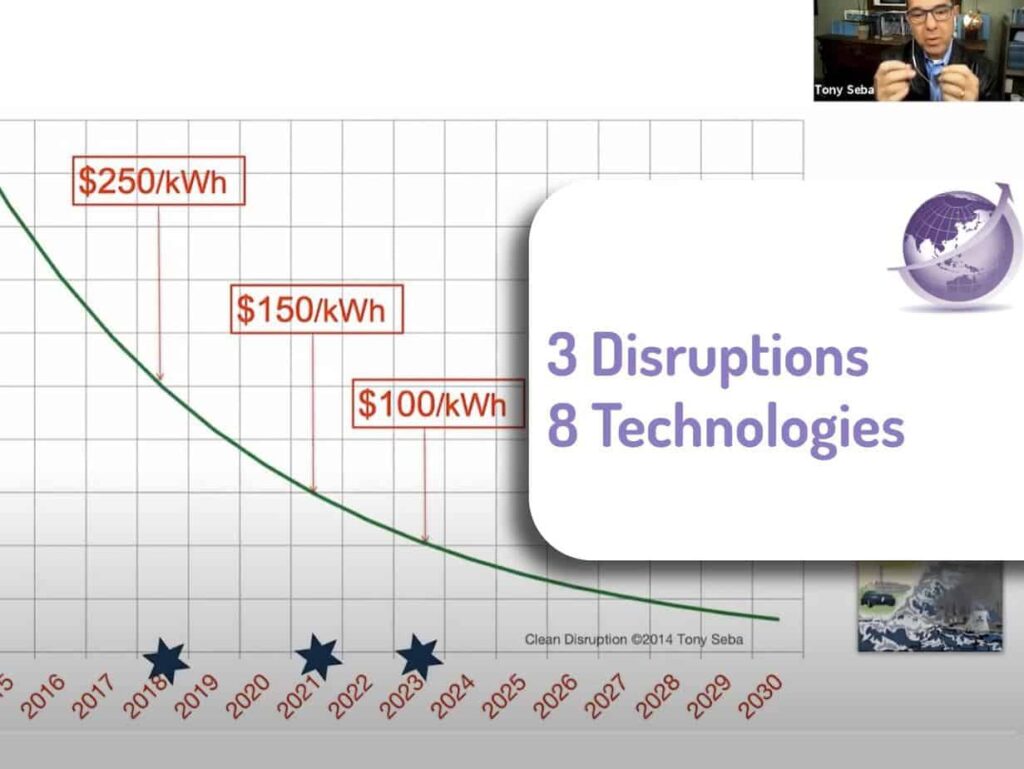
Disruption areas of energy, transportation, and food are driven by 8 technolologies that combine to change the planet. Solar, wind, batteries, automonous driving, precision fermentation and cellular agriculture.
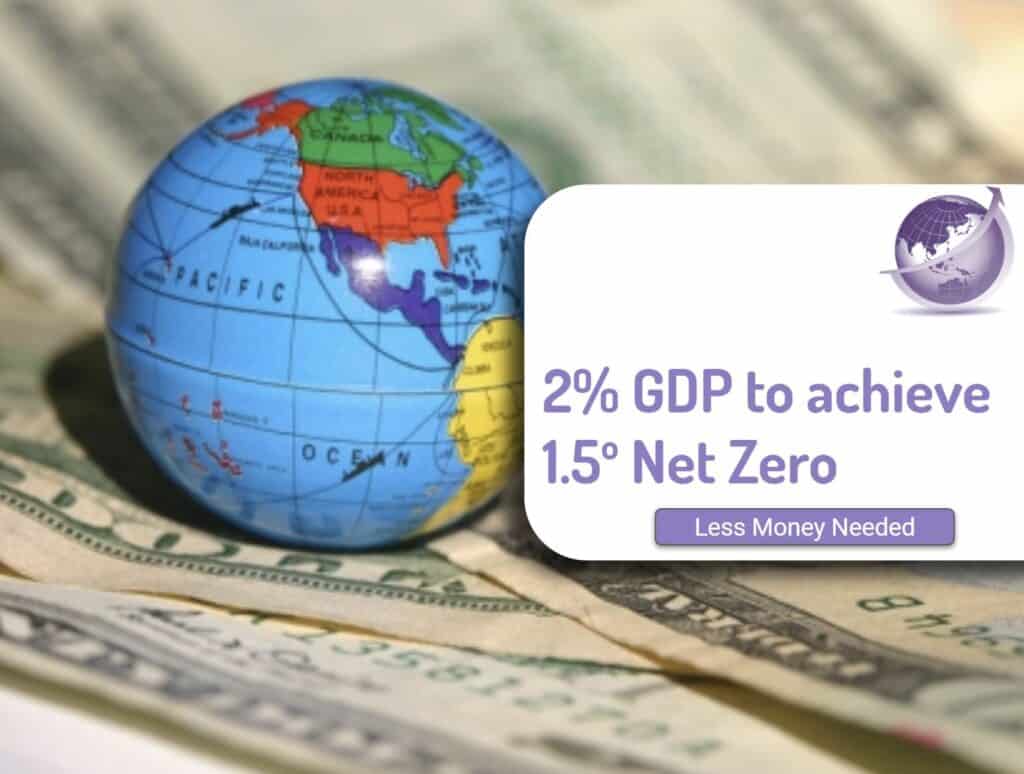
It looks like we need to spend 2 percent GDP for net zero or (1.5 degrees) of climate change. Climate […]
