A Forbes article by Robert Eccles, drawing on an American Enterprise Institute survey, argues that climate change is not an existential crisis and that the “Doomsday” narrative does more harm than good. Parts of that are fair. The conclusion people draw from it is not.
1. How do we respond when the premises are wrong?
Start by conceding what is right. Apocalyptic messaging can breed fatalism, and the IPCC does not forecast the end of civilisation. Then find the hidden step: the article treats “not extinction” as if it meant “manageable”. Answer the premise, not the author, and keep the tone calm. The real question is not whether civilisation ends, but which losses we are choosing to accept.
2. The false premise about temperatures above 1.5°C
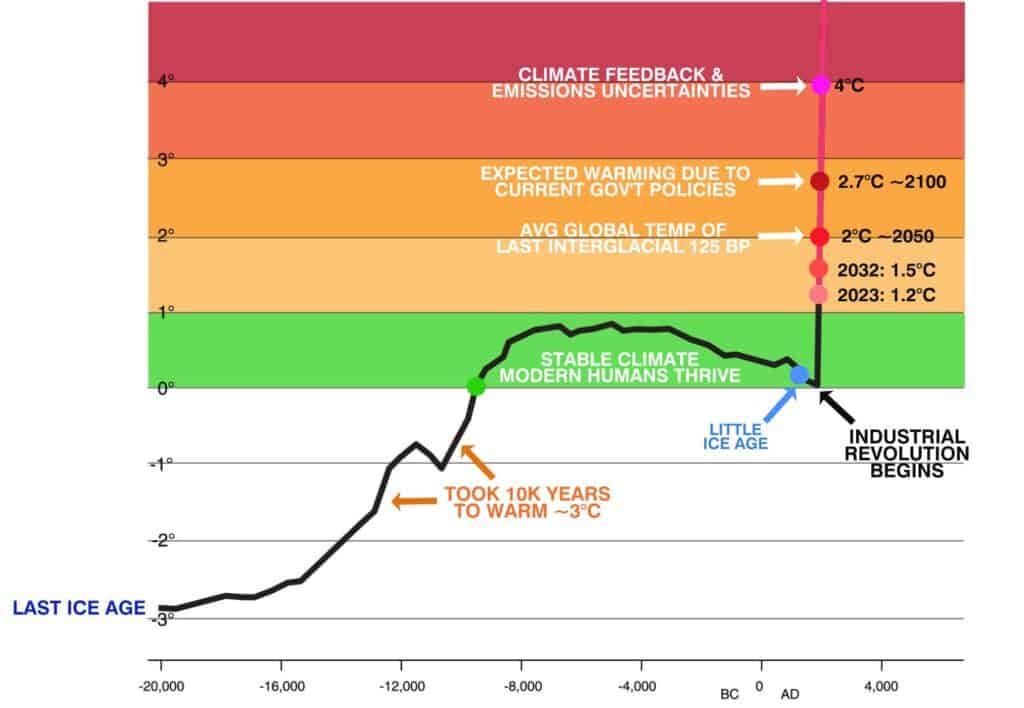
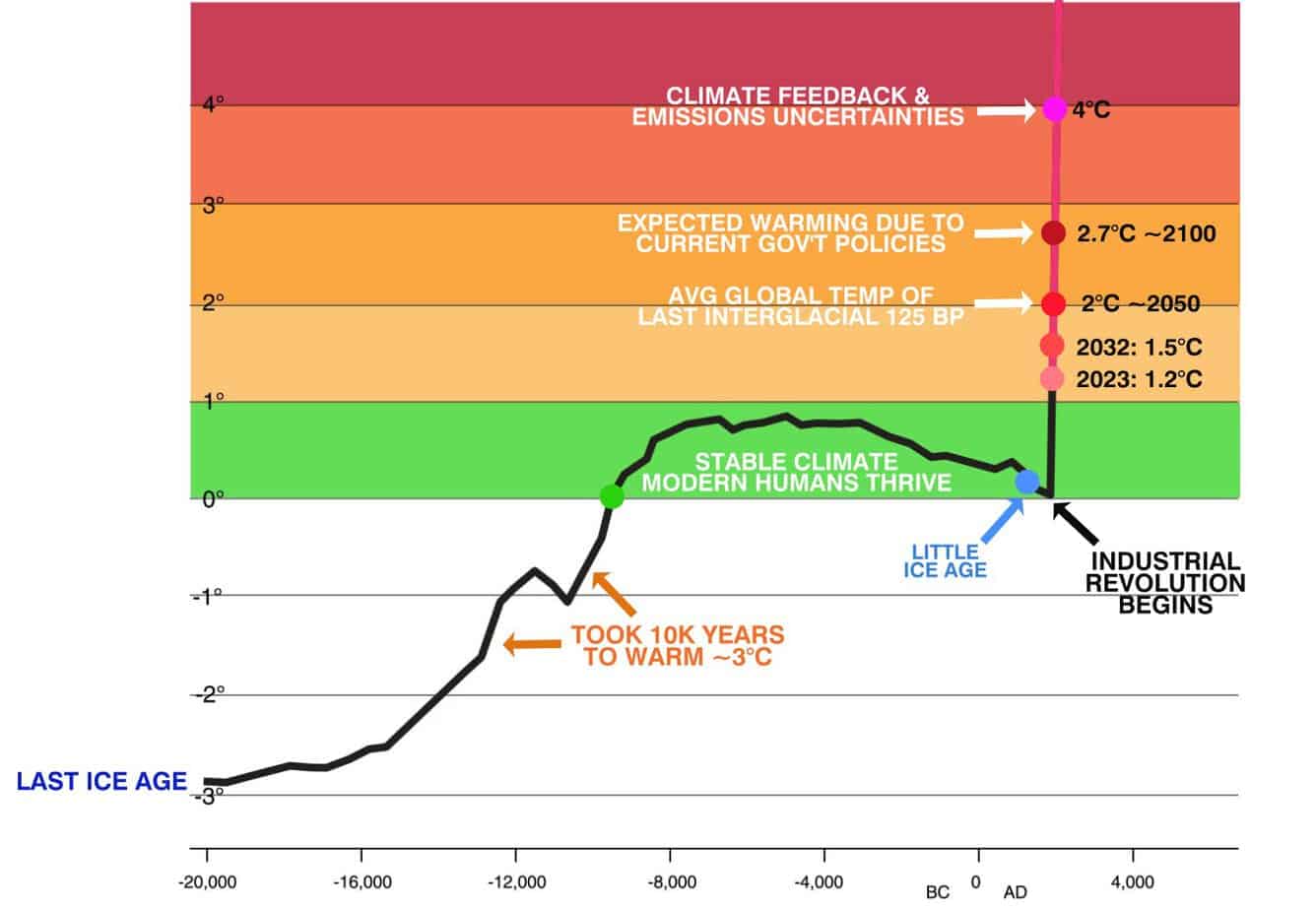
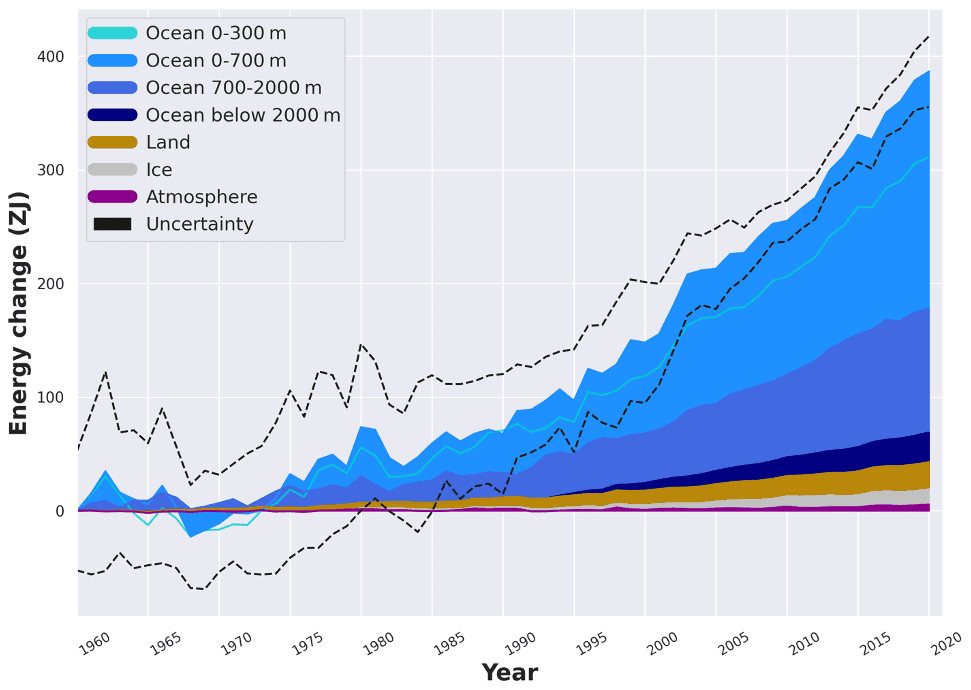
The article presents the IPCC’s tipping-point warnings as serious but survivable, and offers that as reassurance. But the threshold for concern was never extinction. Exceeding 1.5°C is now considered unavoidable in the near term, and 2026 research shows even a temporary overshoot can leave irreversible socioeconomic losses [Kho26]. Permafrost feedbacks, missing from many models, raise the chance of crossing a tipping point by up to 50% [Ste26]. One fair caveat: 1.5°C is not a physical cliff edge [Mck26]. Risk simply climbs with every increment above it.
3. The IPCC is a compromise by design
IPCC summaries for policymakers are approved line by line by governments. Scientists who fear serious outcomes sit alongside delegates who want the report accepted, and the text is pulled toward what everyone can sign. Treating the IPCC’s most cautious language as the ceiling of scientific concern misreads what the document is. Recent scholarship is reflecting on how these assessments work [Dav26, Pet26].
4. The economics are now very clear
A national assessment published in Scientific Reports in September puts numbers on one slice of the damage. Kompas, Che and Grafton find sea level rise and storm surge will cost Australia about $855 billion in present-value losses by 2100 under moderate emissions, and about $1.9 trillion under high emissions [Kom26]. That is roughly 1–1.4% of GDP every year in the first case and 2.3–3% in the second, and the authors say these figures are conservative because they omit environmental and cultural losses. The Climate Council’s summary adds that over 267,000 properties are affected, the Gold Coast alone faces $84.4 billion, and most insurers exclude damage from the sea, so owners carry the cost [CC26].
Broader modelling points the same way. Central-bank scenarios put Australia’s losses near $7 trillion to 2050 under current policies [IGCC26], and one 2026 study suggests earlier models understate damage [Win26]. Narrower channels, such as crop and labour heat stress, cost less [She26]. The range is wide, but the direction is not.
Conclusion
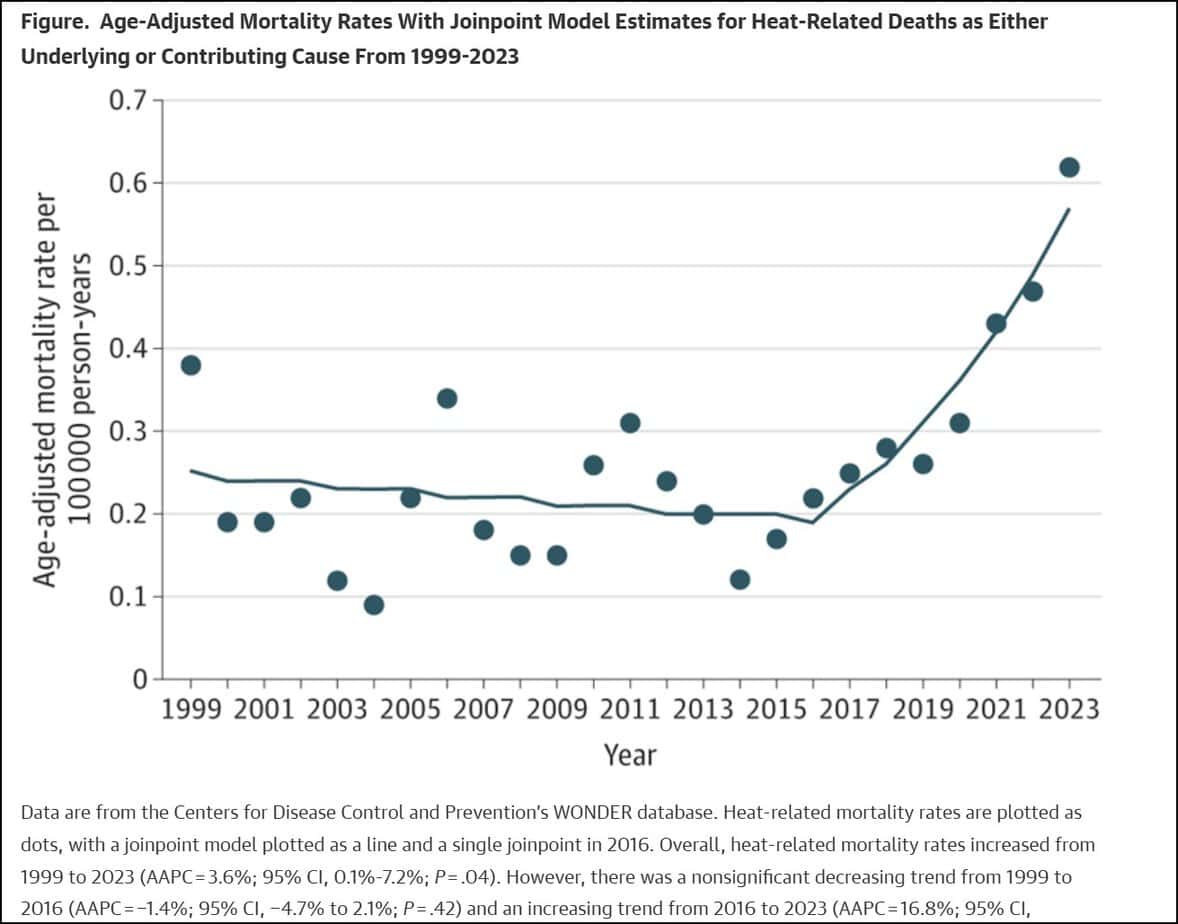
Eccles is right that doom helps nobody. But “not existential” is a low bar. Sea level rise alone will cost Australia close to a trillion dollars under moderate emissions and nearly double that under high emissions, and the bill lands on householders and councils. Honest, numbers-led communication serves us better than either apocalypse or complacency.
References
Article discussed
- Eccles, R. (2025). Here’s Why Climate Change Is Actually Not An Existential Crisis. Forbes.
- Pielke, R. & Teixeira, R. (2025). The Science vs. the Narrative vs. the Voters. American Enterprise Institute.
Australian economic losses
- [Kom26] Kompas, T., Che, T. N. & Grafton, R. Q. (2026). Nationwide economic impacts of sea level rise and storm surge from global warming in Australia. Scientific Reports 16, 27235. doi
- [CC26] Climate Council (2026). Rising Seas, Rising Bills: How sea level rise will cost every Australian. 10 September 2026.
- [IGCC26] IGCC (2026). $6.8 trillion GDP hit if renewable energy transition is delayed. Based on NGFS scenarios.
Papers published April–October 2026
- [Kho26] Al Khourdajie et al. Overshoot pathways: reversible biophysical change, irreversible socioeconomic impacts. Environmental Research Letters. doi
- [Ste26] Steinert et al. Permafrost carbon–climate feedback amplifies Earth system tipping risks. Environmental Research Letters. doi
- [Mck26] Armstrong McKay & Constantino. Tipping points do not make 1.5 °C a physical climate limit. Environmental Research Letters. doi
- [Jin26] Jin & Pu. A recent doubling of global warming rate signals a 1.5 °C breach by 2028. npj Climate and Atmospheric Science. doi
- [Win26] Winter et al. Beyond the mean: the macroeconomic consequences of shifting temperature anomaly distributions. Climatic Change. doi
- [She26] Sheng et al. Long-term global and regional GDP implications of heat stress on crops and labor. Environmental Research Letters. doi
- [Ngu26] Nguyen et al. The Growth Effects of Natural Disasters. IMF Working Papers. doi
- [Orl26] Orlov et al. Towards Comprehensive Economic Assessments of Climate Change Impacts. Economics of Disasters and Climate Change. doi
- [Cha26] Chang et al. Assessing socioeconomic risks of climate change through integrated modelling. The Innovation Energy. doi
- [Glo26] Glocker & Url. Climate Change and Economic Dynamics: Temperature-Dependent Shock Propagation. International Economic Review. doi
- [Dav26] Dave et al. Reflections on international climate assessments. Climatic Change. doi
- [Pet26] Petersmann. The IPCC in the post-Paris climate regime – locked into institutional inertia? Earth System Governance. doi