BYD just destroyed any remaining argument against electric vehicle adoption, launching a million kilometre battery. At the March 5 launch event in Shenzhen, China, BYD Blade Battery 2.0 was shown – able to drive more than 621 miles on a single charge – a million kilometers. In the process, the company has exposed just how far behind the rest of the EV industry has fallen.
BYD’s latest battery and charging tech make other electric vehicles look like Model T’s—at least for now. As the second-largest manufacturer of batteries in the world, BYD is currently supplying batteries to other manufacturers like Toyota, Kia, Hyundai, and even Tesla.
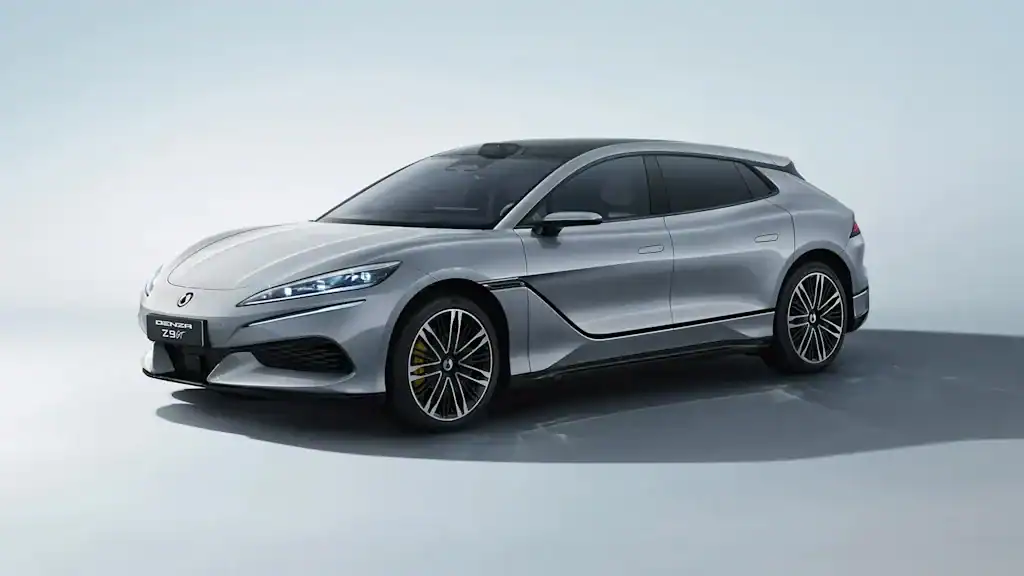
It is early 2026, and the “Model T” comparison is looking more accurate by the day. BYD’s recent unveiling of the Blade Battery 2.0 on March 5, 2026, has fundamentally shifted the benchmarks for range, longevity, and charging speed.
Here is the current state of the “million-kilometer” battery and how it is dismantling the traditional internal combustion engine (ICE) market.
The Technology: Blade Battery 2.0
The hallmark of the new generation is the move into the “1,000 km club.” While previous LFP (Lithium Iron Phosphate) batteries were seen as the “budget” option with limited range, BYD has used a new lithium iron manganese phosphate (LMFP) chemistry to achieve energy densities of 190–210 Wh/kg.
- Range: New models like the Yangwang U7 and Denza Z9 GT are delivering over 1,000 km (CLTC) on a single charge.
- Charging: BYD’s “Flash Charging” system now supports up to 1,500 kW. In real-world terms, this adds 400 km of range in just 5 minutes—effectively matching the time it takes to fill a gas tank.
- Longevity: These batteries are rated for over 4,500 charge cycles. For an average driver, this translates to a total lifespan of roughly 1.2 million kilometers (750,000 miles), meaning the battery will likely outlast the chassis of the car itself.
Impact on the Global ICE Market
The arrival of a million-kilometre battery is the “final nail” for many ICE arguments. We are seeing three major shifts in the global market:
| Feature | ICE Status (2026) | BYD-Tech Impact |
| Resale Value | Declining as “obsolescence” sets in. | High: A car that can do 1M km with minimal degradation holds value far longer. |
| Refueling | 5 mins at a station. | Parity: 5–10 minute “Flash Charging” removes the EV’s biggest convenience hurdle. |
| Operating Cost | High (Fuel + Maintenance). | Minimal: LFP chemistry requires almost zero maintenance over its 1M km life. |
| Range Anxiety | Non-existent. | Solved: 1,000 km range exceeds the distance most ICE cars can travel on one tank. |
1. The Death of “Disposable” Cars
Historically, EVs were feared for their “battery death” (the equivalent of a blown engine). A million-kilometer battery makes the EV a multi-generational asset. This is putting immense pressure on legacy manufacturers (Toyota, Ford, VW) to either adopt BYD’s tech or face a “Kodak moment” where their ICE fleets become unsellable on the secondary market.
2. Technological Democratisation
BYD isn’t just putting this in $100k supercars. They are scaling this tech into the $15,000–$25,000 mass-market segment (like the 2026 Song Ultra). When a $20,000 EV can outlast a $30,000 Corolla in both mileage and fuel savings, the economic choice for the average consumer becomes binary.
3. Supply Chain Dominance
As you noted, BYD is the “battery shop” for the world. By supplying Tesla, Toyota, and Kia, BYD ensures that even if you don’t buy a BYD car, you are likely driving on BYD tech. This vertical integration allows them to dictate the pace of the global transition away from fossil fuels.
What’s Next?
While the Blade 2.0 is the current king, BYD has already teased a Solid-State Battery pilot line with energy densities of 420 Wh/kg, planned for small-batch production in 2027.